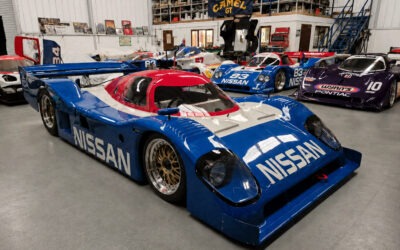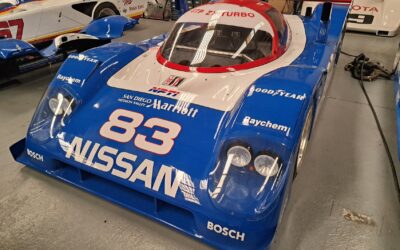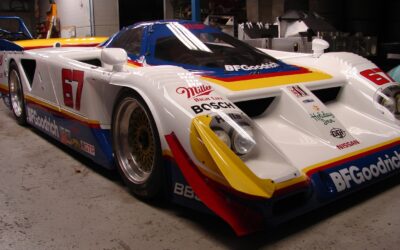
Argo JM19 C
The Argo JM19 C is a lightweight Group C sports prototype race car developed by Argo Racing Cars in the late 1980s for endurance competition. Designed with a compact aerodynamic chassis and advanced ground-effect principles, the JM19 C was powered by turbocharged and naturally aspirated engine options depending on team specification. Known for its agility, efficient design, and strong performance in C2-class racing, the car competed in international endurance events including the World Sports-Prototype Championship.



Specification
Race Category: Group C2 Sports Prototype
Livery: Lucky Strike
Year: 1987
Designer: Jo Marquart, Achim Storz
Chassis Number:
Chassis Construction: Aluminium monocoque construction
Weight:
Aerodynamics: Ground-effect underbody tunnels for high downforce efficiency
Body Style: Closed-cockpit Group C prototype
Steering Position: RHD
Suspension: Fully independent double wishbone suspension front and rear
Brakes:
Engine Details: Zakspeed
Engine Layout: Mid-mounted longitudinal engine
Engine Size: 1850cc Inline 4 cylinder, Garrett turbocharger
Engine Power: 500bhp
Fuel Type: Petrol
Drive Configuration: Rear-wheel drive
Transmission: Hewland manual racing gearbox
Detailed Overview
£POA
Description
The Argo JM19 C is a striking example of late-1980s Group C engineering, developed by British constructor Argo Racing Cars for international endurance racing competition. Built to compete in the fiercely contested C2 category, the JM19 C combined lightweight construction, aerodynamic efficiency, and proven mechanical simplicity to deliver competitive performance over long-distance events. The car was designed around a compact aluminium monocoque chassis with advanced ground-effect aerodynamics, featuring sculpted side tunnels and a low-profile body shape intended to maximise downforce while maintaining high straight-line speed.
Powering the JM19 C were a variety of engine configurations depending on customer and championship requirements, including turbocharged and naturally aspirated units. Many examples ran with the dependable Ford Cosworth DFV V8 engine, a powerplant renowned throughout motorsport for its reliability and strong power delivery. The mid-mounted engine layout, paired with a Hewland manual racing gearbox, provided balanced handling characteristics and efficient weight distribution, making the car agile through technical sections while remaining stable at endurance racing speeds.
The suspension system featured fully independent double wishbone geometry with coil springs and adjustable dampers, allowing teams to fine-tune the setup for different circuits and race conditions. Large ventilated disc brakes and lightweight racing wheels completed the package, giving the JM19 C the stopping power and durability required for endurance competition.
Throughout its racing career, the Argo JM19 C competed in events across Europe and beyond, including rounds of the World Sports-Prototype Championship and national endurance series. While it faced strong competition from larger manufacturers and specialist constructors, the JM19 C earned respect for its efficiency, reliability, and intelligent engineering. Today, the car remains a highly regarded classic Group C prototype, appreciated by historic motorsport enthusiasts for its distinctive design, competitive heritage, and representation of one of endurance racing’s most innovative eras.
Race History
- Debut: Late 1980s endurance racing era
- Racing Series: World Sports-Prototype Championship / Group C2 endurance racing
- Drivers: Competed in the 1987 championship driven by Will Hoy and Martin Schanche.
Features
Comments
Agile handling, compact design, efficient fuel and tyre management.