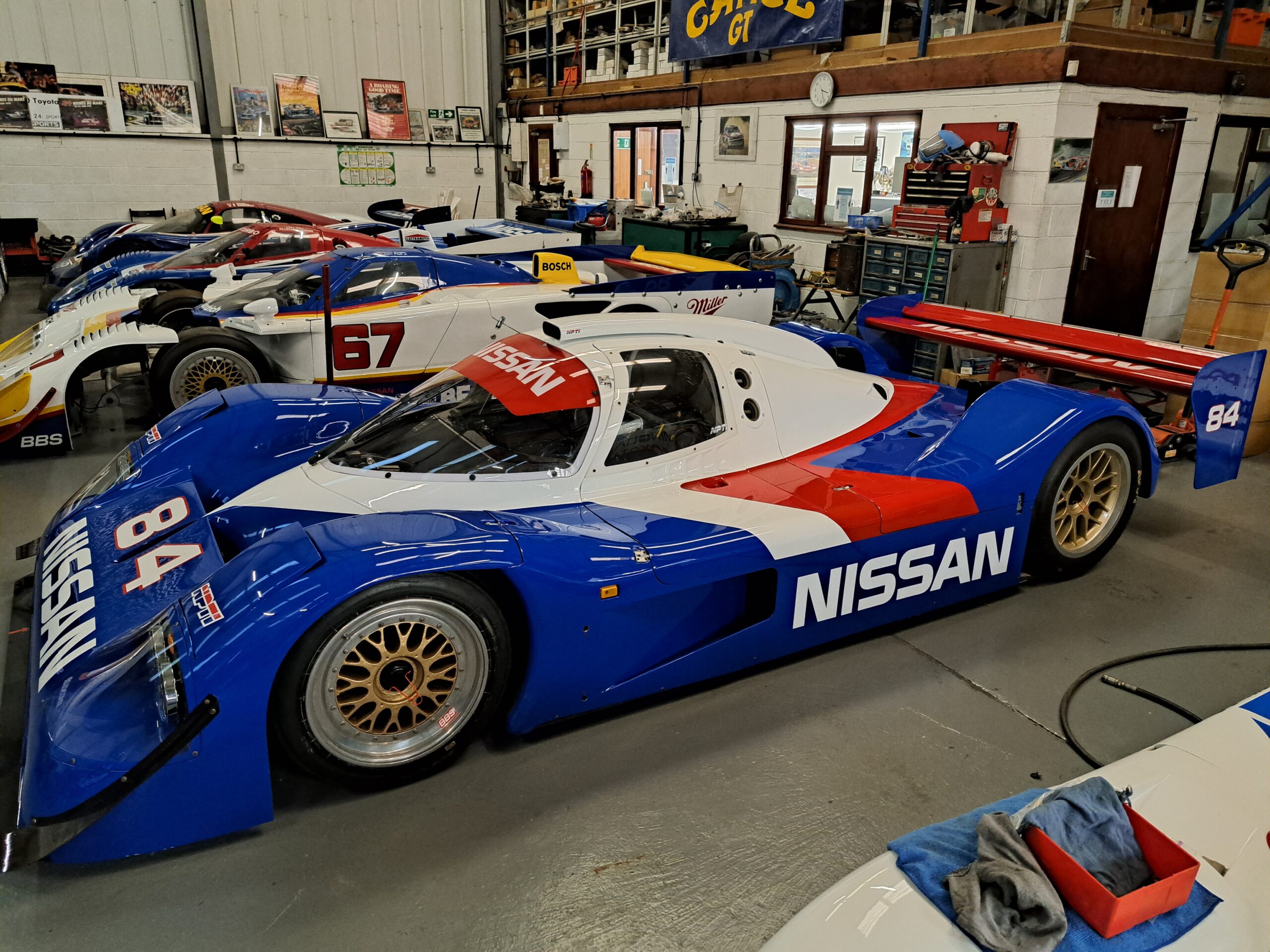
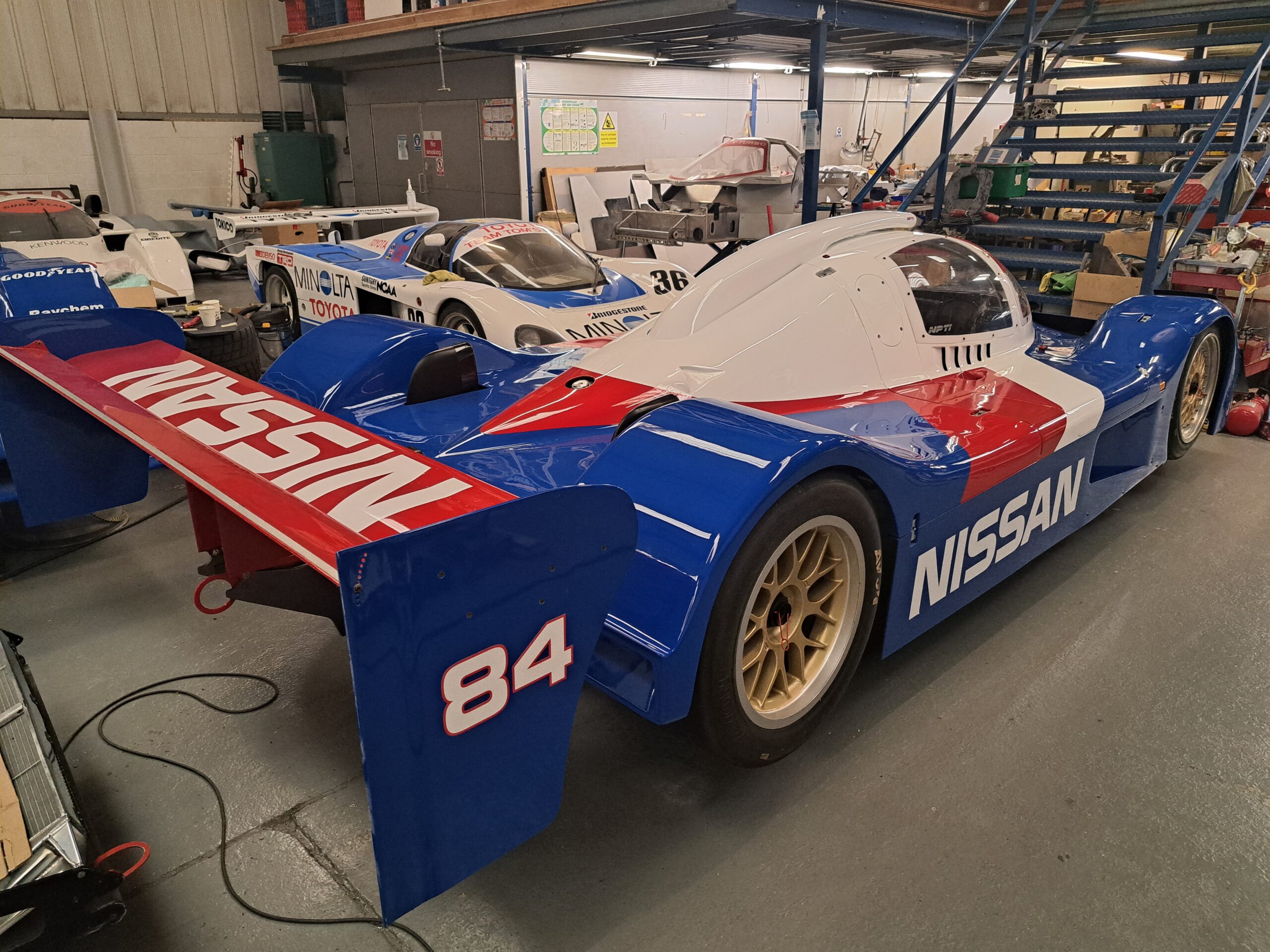
Nissan P35 #02
Restored by Phil Stott Motorsport over ten years. This car’s story started with a chance discovery at a storage facility at Heathrow in 2011. Phil was enquiring about an entirely different car which shared the same facility. Whilst inspecting the other car, this one was spotted in the corner and upon further investigation it became clear what he’d stumbled across. Having been rebuilding Nissan GTP cars for a number of years, this really was a remarkable discovery. View more details about the restoration project <a href="/project/nissan-p35/" target="_blank">here</a>.
Specification
Race Category: FIA Group C / IMSA GTP prototype (1993 regulations)
Livery: Nissan
Year: 1992
Designer: Trevor Harris (chassis) and Yoshi Suzuka (aerodynamics)
Chassis Number: 02
Chassis Construction: Hybrid aluminium and carbon-fibre monocoque (production cars were intended to be full carbon fibre)
Weight: 750kg
Aerodynamics: Advanced ground-effect bodywork with roof-mounted engine intake, low-drag rear wing and extensive underfloor Venturi tunnels
Body Style: Closed-cockpit sports prototype
Steering Position: Centre
Suspension: Double wishbone front and rear
Brakes: Four-piston carbon disc brakes
Engine Details: Nissan VRT35 naturally aspirated V12
Engine Layout: Mid-mounted longitudinal
Engine Size: 3.5 litre
Engine Power: 621 bhp
Fuel Type: Petrol
Drive Configuration: RWD
Transmission: NPTI 6-speed sequential gearbox
Detailed Overview
£
Description
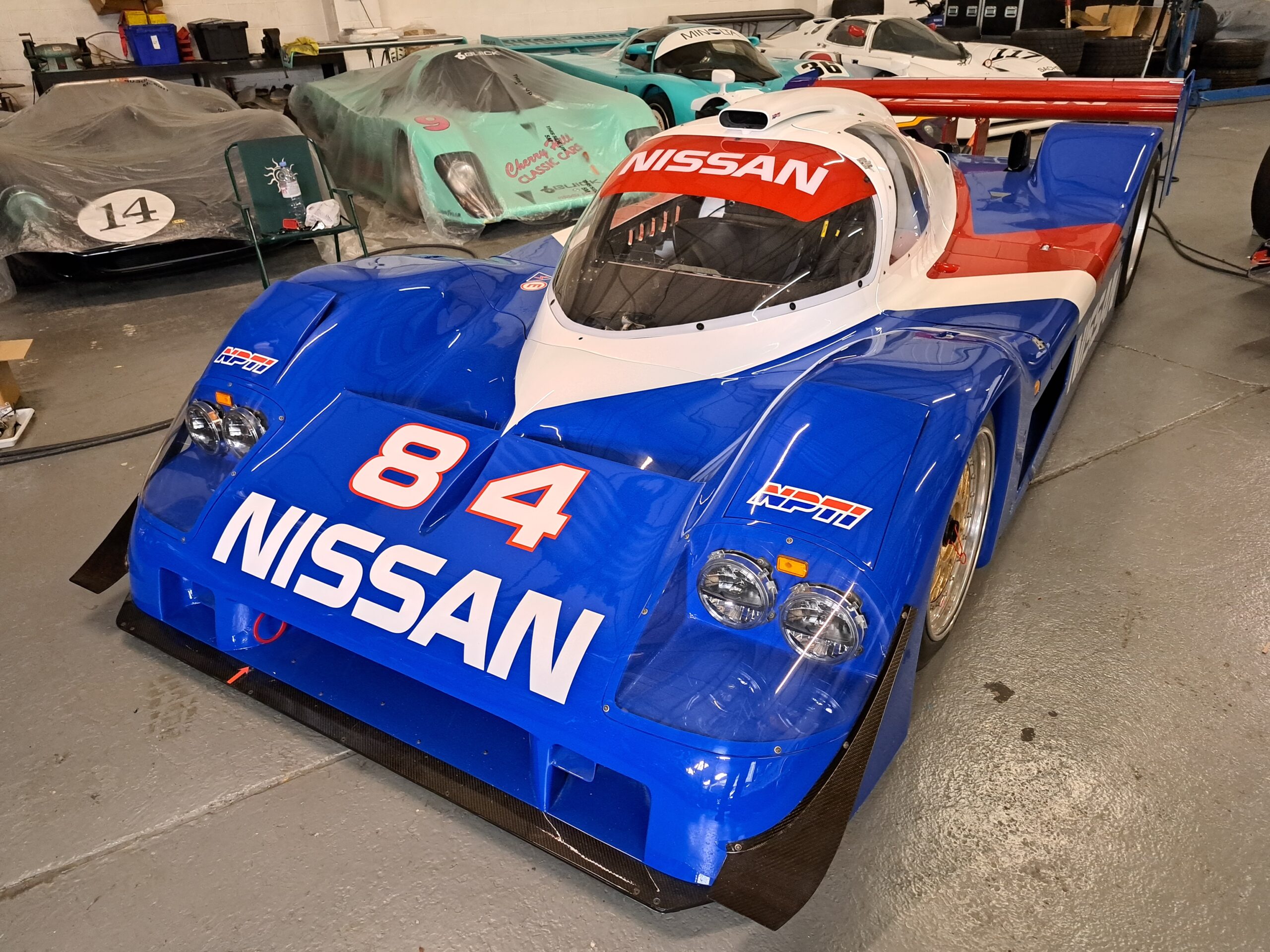
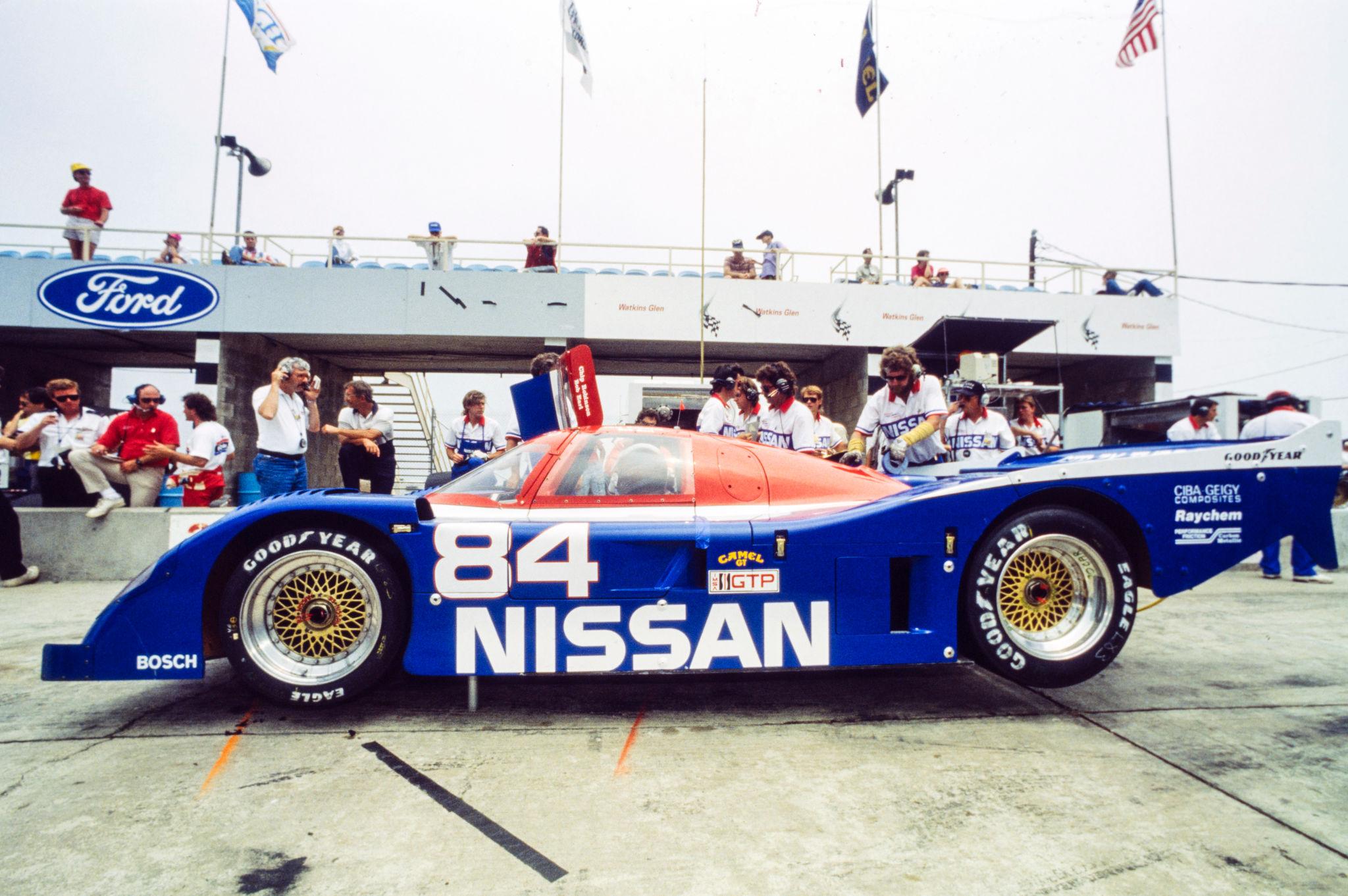
The Nissan P35 chassis #02, finished in car number 84, represents one of the most fascinating “never raced” prototypes in endurance racing history. Developed by Nissan Performance Technology Inc. (NPTI) for the 1993 season, the P35 was created to replace Nissan’s hugely successful turbocharged IMSA GTP machines following the introduction of new regulations requiring naturally aspirated 3.5-litre engines. It was intended to compete in both the FIA World Sportscar Championship and IMSA competition before Nissan’s factory prototype programme was cancelled.
Designed by Trevor Harris and aerodynamicist Yoshi Suzuka, the P35 featured a radical new chassis and aerodynamic package that bore little resemblance to the earlier GTP ZX-Turbo and NPT-90. The hybrid aluminium and carbon-fibre monocoque incorporated a roof-mounted engine intake, deep sidepod oil-cooler ducts, a low-drag rear wing and an advanced ground-effect underbody. Although later cars were intended to use a full carbon-fibre chassis, the initial test cars were built using hybrid construction to accelerate development.
Power came from Nissan’s all-new VRT35 3.5-litre naturally aspirated V12, an engine capable of producing more than 630 horsepower while revving to 11,600 rpm. Designed specifically for the new Formula One-inspired endurance regulations, it delivered a distinctive high-revving soundtrack and was paired with an NPTI-developed six-speed sequential gearbox. The complete package weighed just over 750 kg, making the P35 one of the lightest and most technically advanced sports prototypes Nissan had ever produced.
Chassis #02 underwent extensive testing but, despite being presented in 1993 IMSA specification carrying race number 84, it never competed. Economic pressures, the collapse of the World Sportscar Championship and Nissan’s decision to withdraw from prototype racing brought the programme to an abrupt end before the P35 could race. Today, chassis #02 survives as an important piece of Nissan motorsport history and offers a rare glimpse of what might have been had the final generation of Group C-inspired prototypes reached the circuit.
Race History
- Developed By: Nissan Performance Technology Inc. as the successor to the championship-winning Nissan NPT-90.
- Purpose: Designed to meet the FIA’s new 3.5-litre naturally aspirated prototype regulations introduced for 1993.
- Testing Programme: Extensively tested by Bob Earl at Mid-Ohio and Daytona during 1991–1992.
- Competition Status: Despite carrying car number 84 in 1993 IMSA specification, the P35 never competed in an official race after Nissan cancelled the programme before its debut.
- Cancellation: The project was abandoned due to economic pressures, the decline of Group C racing, and Nissan’s changing motorsport priorities.
- Chassis Built: Three P35 chassis were completed for testing purposes.
- Chassis #02 Today: Chassis #02 is used as a training vehicle within the Motorsport Engineering Workshop at Coventry University.
- Legacy: Considered the missing link between the dominant Nissan NPT-90 IMSA programme and Nissan’s later Le Mans prototypes, as well as one of the greatest “what if” projects in prototype racing.
Features
Comments
Nissan's first naturally aspirated Group C prototype and final design by Yoshi Suzuka before the closure of the NPTI programme.